For worship leaders and acoustic guitarists — and for anyone who has ever heard something beautiful in their head on a Sunday morning and couldn't get it out of their hands.
Who Else Wants to Stop "Filling Space" on Sunday and Become the Acoustic Player Your Worship Team Actually Leans On?
If you can strum G, C, D and Em, you already have everything you need to play any worship song in any key — with voicings that make people turn around and ask, "What are you playing?" — in the next 12 weeks. Here's how.
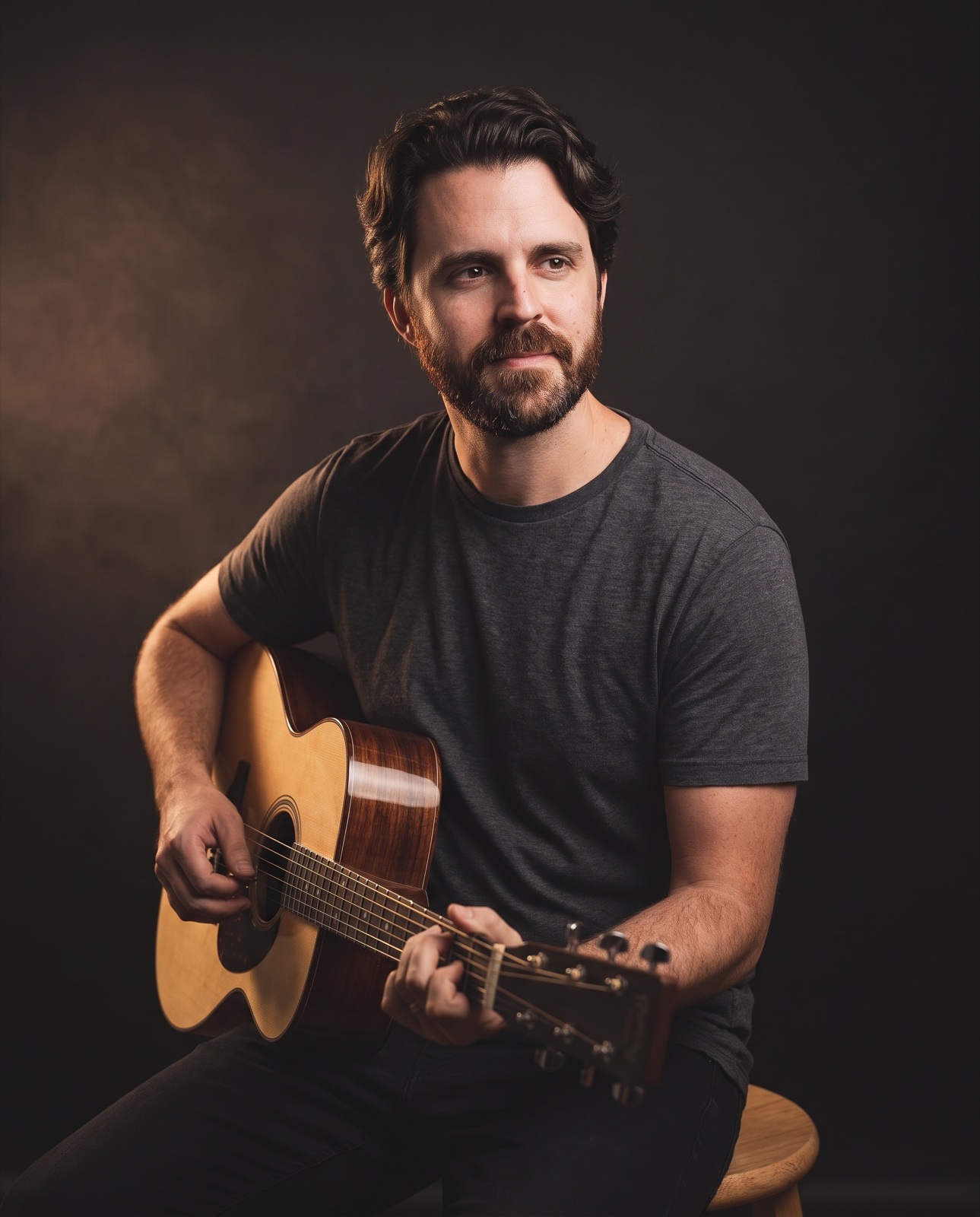
Module 1 · Key of G
Position Ideas
It's the second song.
The worship leader closes her eyes, steps back from the mic, and the band drops to almost nothing. Keys are swelling. The electric player is doing those ambient things he does. The room is leaning in.
And you're holding a G chord.
Strum. Strum. Strum.
You can hear it — a movement, a color, a voicing that would sit perfectly under what she's singing. It's right there in your head.
But your hands don't know where it lives on the neck.
So you keep strumming. Quietly. And you hope nobody notices.
Nobody does.
That's the problem.
The frustration
Somewhere along the way, dependable started to mean invisible.
You've been "the acoustic guy" for years now. You show up early. You know the songs. You're dependable.
Here's the part nobody says out loud: it's frustrating to feel more in your heart than you can express with your hands. Especially when the whole point of being up there is to express it.
You don't need more passion. You've got that.
You need your hands to catch up with your ears.
The sound guy pulls your fader down in the mix, and honestly, nobody can tell.
The singer says, "Let's take it up to B tonight," and you reach for the capo and pray.
You've got 47 YouTube tabs open — "jazz voicings," "CAGED system," "Nashville numbers explained" — and you've watched all of them and you still play the same open chords you played five years ago.
And in the moments that matter most — when worship goes somewhere unplanned and the Spirit is clearly moving — you're the one person on stage just... waiting for it to be over.
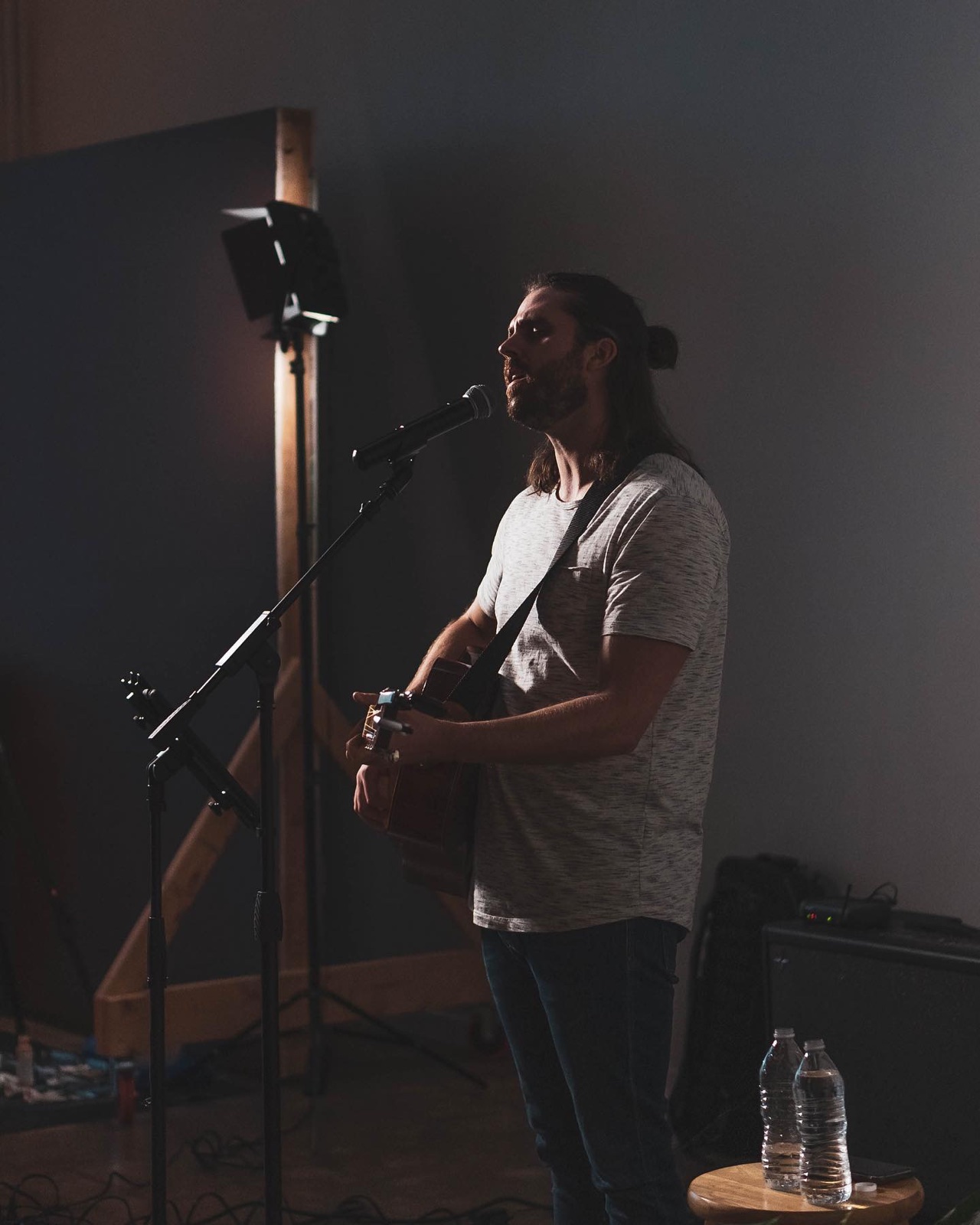
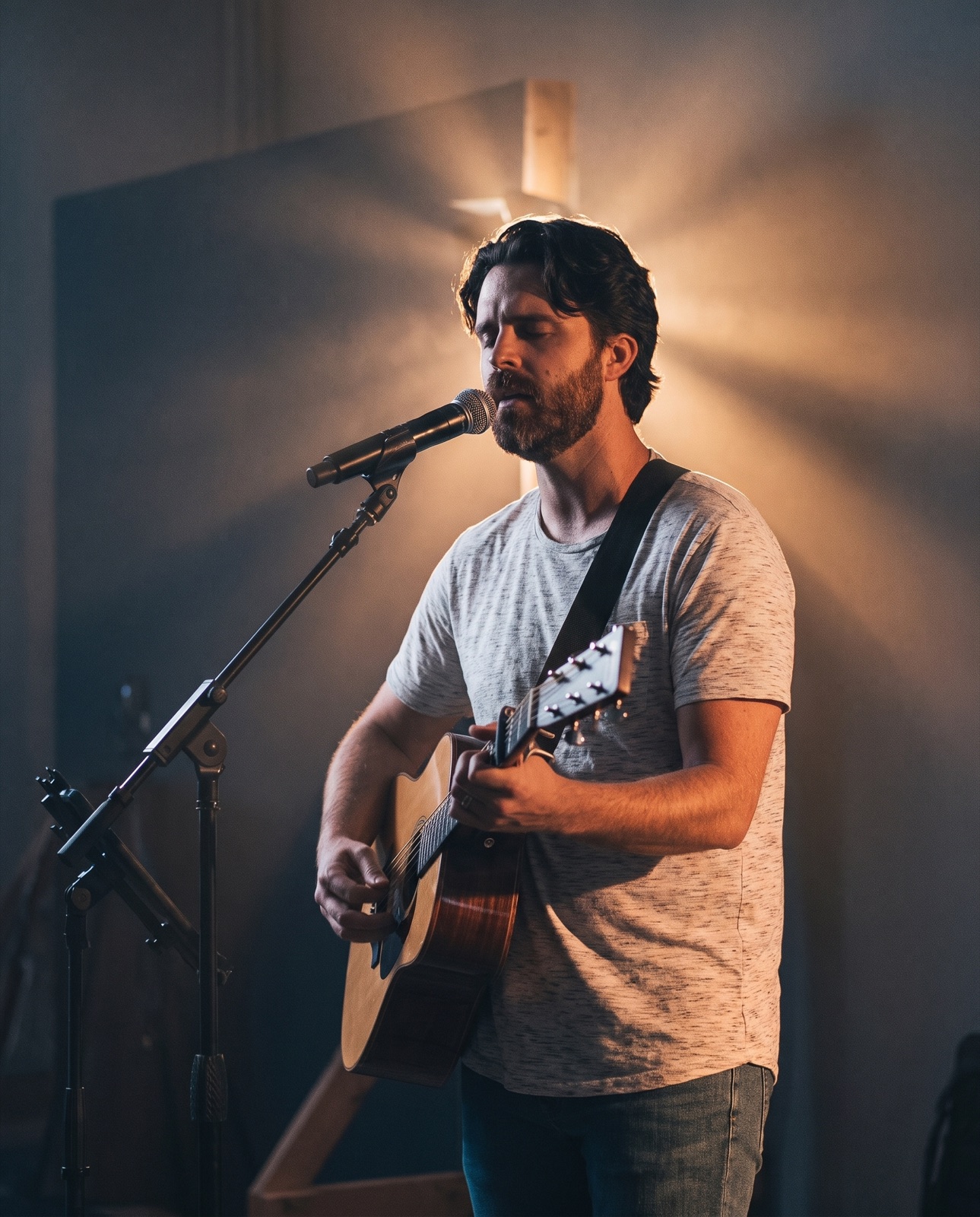
About Eli
My name is Eli. And I was that guy holding the G chord.
[1–2 sentences: years playing / leading worship, church, context. Example: "I've led worship and played acoustic on teams for X years at Y, and trained Z guitarists who now lead their own teams."]
[3–4 sentences of your own turning point. The moment you realized the problem wasn't talent — it was not being able to see the fretboard in every key. The more specific and honest, the better.]
I'm not sharing this to impress you. I'm sharing it because I know exactly what it feels like to have a sound in your head on a Sunday and no way to get it out — and I know it's fixable. Not in years. In weeks.
Two guitarists
Picture two guitarists who join a worship team the same month.
Same guitar. Same four chords. Same heart for worship. Five years later…
The first one
The second one
The difference between them was never talent. The second one learned to see the fretboard in every key — and the first one never got a system for it.
Introducing
Sunday-Ready: The 12-Week Every-Key Worship Guitar System
A step-by-step path from "background strummer" to the acoustic player your team can't do without — 15 minutes a day, no theory degree required.
Here's everything you get
#1 — The heart of the system
$1,497 value
The Every-Key Voicing Library
For every one of the 12 keys, you get three focused modules:
Module 1
Position Ideas
Every usable voicing for the major and minor chords in that key, on video, at real playing tempo. Not a pile of shapes: the ones that actually get used on worship stages.
Module 2
What Works Together
Which voicings pair, which ones fight, and how to move between them so the changes sound intentional instead of clunky.
Module 3
Putting It All Together
Playing full worship-style progressions in that key using everything from Modules 1 and 2. This is where it stops being an exercise and starts being music.
That's 36 lessons. If you took this as weekly private lessons at $40–60 an hour, you'd spend $1,440 to $2,160 — and a year of Tuesday nights driving across town.
#2
$97 value
The Sunday-Ready 15-Minute Practice Plan
You don't need more practice time. You need to know what to do with the time you have. A printable, week-by-week plan for all 12 weeks: exactly what to work on each day, in 15 minutes, in the right order. Check the box, close the case, go to bed.
#3
$297/year value
The Sunday-Ready Circle
A private community of worship guitarists doing the same thing you're doing. Post a 60-second clip of what you're working on. Get feedback from me and from players a few weeks ahead of you. Try the new voicing here first — where it's safe — so that by Sunday it's not new anymore. Plus a live Q&A with me every month.
Bonuses
And because I want you to have zero excuses left, you also get these bonuses:
The 5 Shapes That Cover 90% of Worship Songs
One page. Five moveable shapes. Learn them in 48 hours and you'll already sound different next Sunday. This is your first win, and it comes fast on purpose.
Numbers That Finally Make Sense
The Nashville Number System, explained the way a guitarist actually needs it — plus play-along ear-training videos where I call the numbers and you find the chord in real time, then learn to hear the difference between the major and minor sounds in any key. This is how you stop memorizing songs and start hearing them. Even if you're convinced you "don't have an ear."
The Key-Change Survival Chart
Capo or no capo, every key, on one printable sheet. For the night the singer changes the key five minutes before service. You'll be the calm one.
Find Your Place in the Mix
What to play — and what to leave out — when there's a keys player, an electric player and a bass on stage with you. How to be heard without being loud. After this, the sound guy leaves your fader up.
The Spontaneous Worship Playbook
The exact moment that used to terrify you. What to play when the leader goes off-script: movements that build, voicings that float, when to swell and when to get out of the way. How to follow — and eventually, how to lead — those moments with confidence.
"Excellence Is Worship"
A short teaching for the part of you that wonders whether wanting to play better is pride. The Psalms say to play skillfully. The musicians in David's tabernacle were trained. Getting good at your instrument isn't a distraction from worship — it's an offering. This one will free you up more than any chord shape.
Your investment
Let's add it up.
5 Shapes · 90% of songs
The Circle
Everything that comes with your enrollment
You're not going to pay $2,526. You're not going to pay what one semester of private lessons costs, either.
Your investment in Sunday-Ready
That's less than a decent capo, a set of strings and a pedal you'll use twice. And unlike the pedal, this changes how you play for the rest of your life — in every song, in every key, on every Sunday.
You're on the list. Check your inbox for the next step.
30-day Second-Sunday Guarantee · Every-Key Promise · Enrollment closes Sunday, October 4, 2026
Guarantee
You're protected two ways.
30 days, no conditions
The Second-Sunday Guarantee
Join today. Work through the first two weeks. If by your second Sunday you haven't added at least one new voicing to a song you already play — something you can hear the difference in — email us and you'll get every dollar back. No forms. No "why." No hard feelings.
Finish all 12 weeks
The Every-Key Promise
Finish all 12 weeks. Post your weekly check-in clips in the Circle. If you still can't play through a standard worship song in any key without a capo, I will personally coach you — video feedback, back and forth — until you can. At no extra cost. I'm not guessing that this works. I'm putting my time behind it.
The only outcome I can't guarantee is the one where you close this page and keep holding the G chord.
Deadline
Enrollment closes Sunday, October 4, 2026 at midnight.
Sunday-Ready runs in cohorts. Everyone starts together on Monday, October 12, 2026, so the Circle is full of people at your stage, working on the same week you are. That's what makes the feedback work.
After October 12, 2026, the doors close, and the next cohort doesn't open for about three months.
Fast-action bonus — first 30 only
A Personal Video Review from me
The first 30 people to enroll get a Personal Video Review from me. You send one clip of you playing a song you know. I record a breakdown of the one thing to fix first that'll make the biggest difference. I can only do 30 of these per cohort — it's just me, and each one takes real time. When they're gone, they're gone.
30 of 30 video reviews remaining
This is for you if...
This is NOT for you if...
Questions you're probably asking
It's exactly what the plan is built around. Fifteen focused minutes with a clear target beats an hour of noodling every time. Most students practice less than before — and improve faster — because they finally know what to do.
If you can play G, C, D and Em cleanly, you're ready. Everything builds from there. If you're not there yet, learn those four first, then come back.
If you can already play any worship song in any key, in multiple positions, without a capo, and you know which voicings to use under a keys player versus solo — you don't need this. If any of that made you hesitate, you do.
No. You'll understand why things work by the end, but you'll learn it through your hands, not a whiteboard. If you've tried theory and bounced off, this was built for you.
Yes — and here's why: the capo is a crutch that limits you to one set of shapes. The moment you can play in every key without it, the capo becomes a choice instead of a necessity. You'll still use it. You just won't need it.
That's why there's a week-by-week plan, a community that expects to see your clip, and a guarantee that only pays out if you actually do the first two weeks. This was designed by someone who's also bought courses and never finished them.
Then you're covered by the Second-Sunday Guarantee (30 days, full refund) and the Every-Key Promise (I coach you until it does). The risk is on me.
Lifetime access to every lesson, bonus and future update, plus 12 months inside the Sunday-Ready Circle with the option to renew.
P.S. Remember — you're protected by the Second-Sunday Guarantee. Work through two weeks. If you haven't added something new to your playing, email and get it all back. The only way to lose here is to not try.
P.P.S. The first 30 get a personal video review from me. Once those are gone, the next chance is the next cohort, about three months out. If you're going to do this eventually, doing it now costs the same and gets you the extra.
P.P.P.S. You don't need to be more talented. You don't need more time. You need your hands to know where the sounds in your head live on the neck. That's a system, not a gift. And it's twelve weeks away.